



The online trading platform market continues to boom. Current projections show the market nearly doubling from $3.97 billion in 2024 to $7.80 billion by 2029. These tools have become crucial for investors across all experience levels.
Our team reviewed over 60 investment account providers. Many platforms advertise zero-commission trades for stocks and ETFs, but hidden costs accumulate steadily. The market volatility of February 2020 exposed a serious issue – millions of customers found that there was widespread freezing and crashing of trading apps during critical moments.
A trading platform serves as a software application system that lets users conduct trades and manage market positions through brokerage firms. The top online trading platforms use advanced architecture to boost security and information transparency. This becomes particularly significant since the Securities Investor Protection Corporation insures most broker accounts up to $500,000.
The right platform choice carries more weight than most realize. A platform’s limited selection of stocks and ETFs might work for beginners but can hinder growth as investment strategies mature. Our team brings over 50 years of combined finance and investing writing experience. We’ve identified 15 key features that will shape the best online trading platforms in 2026.
Commission-Free Trading

Image Source: tastyfx
Commission-free trading has revolutionized how investors approach the market. Major retail brokerages dropped their commissions to zero in 2019, and this feature has become what everyone expects when choosing an online trading platform.
What Commission-Free Trading Is
Commission-free trading lets investors buy and sell stocks, ETFs, and sometimes options without paying a direct trading fee to the brokerage. Brokers used to charge $5-10 per trade to execute orders in traditional models. This cost-saving approach now puts more of your money into purchasing assets instead of covering transaction costs.
In spite of that, “zero commission” doesn’t mean trading comes without any costs. Brokerages make their money through other channels, including:
- Payment for order flow (PFOF)—compensation received for routing orders to specific market makers
- Interest earned on uninvested cash balances
- Premium subscription services
- Foreign exchange fees when trading international securities
Why Commission-Free Trading Matters
Commission-free trading has made market access more democratic, especially when you have investors just starting their first investment. Investors can buy even single shares—or fractional portions—without fees cutting into their returns.
Removing fees has proven to be a game-changer for retail investors. Research shows that investors’ net performance improves by about 11% annually without fees. Platforms that offer zero-commission trades have seen remarkable growth, with new user numbers jumping 172% in markets where fees disappeared.
How Commission-Free Trading Helps Traders
Commission-free trading preserves capital effectively. Money saved on fees stays active in your investment portfolio.
It also changes how investors behave in beneficial ways. Studies show investors build more diverse portfolios when trading without fees. Trading activity typically goes up by about 30%, which gives investors more flexibility to adjust their positions as markets shift.
These benefits are substantial, but execution quality varies between platforms. Greenwich Associates points out that “retail investors have never had it better,” but investors should watch how different execution methods might affect their overall returns.
User-Friendly Interface

Image Source: Devexperts
The online trading platform’s interface acts as a vital bridge between traders and financial markets. Many tech-savvy users find trading platforms confusing and cumbersome. This leads to frustration, reduced trading activity, and they might switch to competitors.
What a User-Friendly Interface Is
A user-friendly interface lets traders guide through features and functions naturally. It has:
- Clean, well-laid-out layouts with clear menus
- Customizable dashboards that show personal information
- Quick access to top trading tasks
- One-click trading options to execute trades fast in volatile markets
Charles Schwab shows this approach with its platform that lets users move easily from portfolios to relevant tax forms. E*TRADE’s clean interface helps beginners avoid the common frustrations they face with trading platforms.
Why a User-Friendly Interface Matters
Traders making decisions need immediate responses, and a clunky interface becomes a liability. Good interface design builds trust in an industry where a single wrong click can result in lost funds or missed opportunities.
Trading platforms should create easy-to-use tools that users can learn and direct quickly. This becomes vital for people starting their trading journey. The best platforms keep things simple while ensuring new traders can understand the layout and functions.
How a User-Friendly Interface Helps Traders
A well-designed interface reduces confusion and lets users complete trades fast. Platforms with optimized data views need less scrolling and fewer steps to finish tasks.
The easy-to-use design makes the investment trip better by:
- Making trading available to more people
- Cutting down user errors that lead to expensive mistakes
- Reducing the need for customer support help
- Creating user loyalty through good experiences
Successful trading platforms balance simplicity with power. They offer a clean interface at first and add advanced features when users need them.
Mobile App Access

Image Source: Binmile Technologies
Mobile app access has become vital for traders who need market connectivity no matter where they are. The numbers tell the story – over 70% of global retail traders now use mobile trading apps to manage their investments. What was once a luxury has become a necessity.
What Mobile App Access Is
Mobile trading lets investors use wireless technology on smartphones and tablets through specialized applications. Traders can now access platforms from their phones instead of being tied to computers. Most big brokerages provide mobile apps that work just like their desktop versions. Take thinkorswim mobile as an example – it offers almost all desktop features and lets users sync their market scans and priorities across devices.
Why Mobile App Access Matters
Mobile trading breaks down location barriers. Traders can now access markets anywhere with an internet connection. This freedom lets people trade from work, home, or while traveling abroad. Research shows that Neobroker users grew by a lot during the pandemic. Young people used their extra time during lockdowns to start trading through mobile apps.
Beyond convenience, mobile access gives traders key advantages:
- Real-time responsiveness – Quick reactions to market changes and breaking news
- Continuous portfolio monitoring – Investment tracking outside regular trading hours
- Cross-platform compatibility – Quality apps work on both iOS and Android devices
How Mobile App Access Helps Traders
Mobile trading has changed how investors interact with markets. Advanced mobile platforms now offer complete tools including:
- 300+ technical charts and indicators at your fingertips
- Customizable alerts for price changes, news, and portfolio updates
- Instant order execution capabilities
In spite of that, mobile trading has its limits. Smaller screens usually show only one chart or document at a time with less detail. Trading apps also use more data and processing power, which drains batteries faster than other apps. Weak signals can disrupt trading in areas with poor connectivity.
These challenges exist, but mobile access brings improved flexibility, immediate information, and on-the-go trading. These features make it essential for any competitive online trading platform.
Advanced Charting Tools

Image Source: StockCharts.com
Technical analysts use advanced charting tools as their main weapons to navigate complex market movements. Modern online trading platforms now combine detailed chart features that were once exclusive to professional traders.
What Advanced Charting Tools Are
Advanced charting tools offer interactive visualization features that turn raw price data into useful insights. These tools include:
- Various chart types (candlestick, bar, line, Heikin-Ashi, Point & Figure)
- Technical indicators (moving averages, oscillators, volume analysis)
- Drawing tools for trendlines, channels, and pattern identification
- Customizable timeframes from tick-by-tick to multi-year views
Leading online trading platforms excel with their extensive capabilities. Top providers feature 14+ chart types, 90+ drawing tools, and over 100 pre-built indicators. Platforms like TradingView let traders see fundamental data directly on charts and connect price movements with business metrics.
Why Advanced Charting Tools Matter
Advanced charts are the foundations of technical analysis. Traders can generate short-term trading signals and evaluate a security’s relative strength against broader markets. This visual approach helps spot patterns that might stay hidden in numerical tables or financial statements.
The best platforms stand out by adding AI-powered features. These include automated trendline detection and candlestick pattern recognition across 40+ formations. Such tools serve as both analytical frameworks and decision support systems.
How Advanced Charting Tools Help Traders
These tools make complex analysis simple. Traders can compare multiple securities at once using chart grids that show up to 28 simultaneous charts. Market analysis becomes more efficient.
Pattern recognition features highlight technical formations as they develop. Traders can save their preferred settings as custom templates and apply consistent analysis frameworks to different securities.
Advanced features like dynamic price alerts based on chart patterns instead of simple price thresholds give traders context-aware notifications about potential entry and exit points. Static analysis transforms into active trading signals.
Real-Time Market Data

Image Source: TrueData
Market timing plays a vital role in financial success. Professional and retail traders need live information to build working trading strategies.
What Real-Time Market Data Is
Live market data gives you instant financial information straight from exchanges or through data vendors. Regular data lags 15-20 minutes behind actual market movement. Live data shows you:
- Current stock prices and trading volumes
- Bid and ask quotes
- Order book updates showing market depth
- Streaming financial information
This steady stream of data covers stocks, currencies, and cryptocurrencies. Live data shows you exactly what’s happening in the markets right now.
Why Real-Time Market Data Matters
Markets move fast, and milliseconds can mean the difference between spotting a chance first or missing out. The London Stock Exchange handles more than 500,000 trades each day at its quietest. Each trade could be a chance to profit or a risk to avoid.
Live data gives traders an edge because they can react quickly to market changes. This becomes vital during major events like economic announcements or corporate earnings reports when prices jump within seconds.
Old data can mislead traders in today’s ever-changing markets, causing them to miss good trades or make bad decisions.
How Real-Time Market Data Helps Traders
Live data helps different trading styles in unique ways:
- Day traders need instant information to make quick decisions
- Swing traders spot short to medium-term price trends
- Long-term investors make better strategic moves with current information
Live data helps traders manage risk better. They can spot sudden market moves, watch how different assets move together, and adjust their positions quickly. This helps them navigate rough market conditions more effectively.
Modern trading platforms now offer complete live data packages that cover millions of instruments worldwide. Individual investors can access the same high-quality information that professionals use.
Low or No Account Minimums

Image Source: Kiplinger
Old barriers to investment continue to fall as online trading platforms remove account minimums. This change opens doors for investors from all financial backgrounds.
What Low Account Minimums Are
Low or no account minimums mean you don’t need an original deposit to open a trading account. These brokerage accounts let you trade without keeping a specific amount of money to avoid penalties or fees. Many top brokerages now offer accounts that you can open without any minimum deposit.
Major platforms like Charles Schwab, Fidelity, Robinhood, Webull, and ETRADE let investors start trading with no account minimums in their standard brokerage accounts. Some services like margin trading or robo-advisory features still need minimum balances though. ETRADE’s robo-advisor platform requires $500.
Why Low Account Minimums Matter
Zero balance requirements greatly improve access to financial markets. High minimum balance requirements are the biggest problem that keeps “unbanked” people from opening accounts. Trading platforms now welcome investors that might have been left out of market participation by removing this barrier.
Commission-free trading and low account minimums are the foundations of investing’s democratization. This transformation helps younger investors and those with limited starting capital who can now build portfolios without waiting to save large amounts.
How Low Account Minimums Help Traders
Zero minimum accounts give you unmatched financial flexibility. Users can take out funds down to the last cent without worrying about penalties that traditional accounts might charge. This flexibility helps if you have irregular income streams, like freelancers or gig workers.
Platforms that remove minimum requirements let beginners ease into investing. Some brokers offer micro accounts where you can start with just $5-$10. These low-threshold accounts combined with fractional share investing let newcomers buy portions of high-value stocks without needing large amounts upfront.
Fractional Share Investing

Image Source: Robinhood
Fractional ownership is changing how people access premium investments by breaking down financial barriers that once kept many investors on the sidelines.
What Fractional Shares Are
Fractional shares let you own pieces of whole stock shares. This means you can buy parts of stocks instead of complete shares. A stock priced at $500 becomes accessible with just $50, which gets you 10% ownership of that share. Buying partial shares wasn’t common in the past, but state-of-the-art technology has made fractional investing possible through specialized brokerage platforms. These platforms do all the math automatically – you just need to decide how much money to invest, starting at just $1.
Why Fractional Shares Matter
High share prices used to keep many investors from buying premium stocks like Amazon, Google, and Tesla. Now, fractional shares make investing available to everyone by removing these price barriers. This approach appeals to younger investors and communities that might have found high entry costs intimidating. The ability to own pieces of popular, high-priced stocks has become a major selling point for online trading platforms.
How Fractional Shares Help Traders
Fractional investing helps you diversify your portfolio even with limited funds. You can spread your money across companies of all sizes instead of putting everything into one stock. On top of that, it supports dollar-cost averaging – a strategy where you invest fixed amounts whatever the share price. You’ll also get your fair share of dividends – owning 1/4 of a stock with a $1.00 dividend means you get $0.25.
Robo-Advisory Integration

Image Source: Relevant Software
State-of-the-art algorithms have transformed professional investment management. Modern online trading platforms now offer everyday traders access to robo-advisory services.
What Robo-Advisory Integration Is
Robo-advisors are automated digital platforms that use algorithms to manage investments and plan finances with minimal human input. These systems learn about your investment goals and create custom portfolios based on proper asset allocation. The systems handle day-to-day management tasks and automatically rebalance portfolios that drift beyond 5% of recommended allocations.
Why Robo-Advisory Integration Matters
The global robo-advisory market continues to expand. Market projections show growth from $8.40 billion in 2023 to $116.40 billion by 2033—a 30.3% annual growth rate. Traditional financial advisors charge around 1% of managed assets, while robo-advisors cost only 0.25% to 0.50%. Hybrid robo-advisors blend algorithmic efficiency with human oversight and captured 60.7% of 2024 revenue. Cost-conscious investors find this feature particularly appealing.
How Robo-Advisory Integration Helps Traders
Traders benefit from robo-advisory tools through:
- Automated tax-loss harvesting that balances gains with losses
- Up-to-the-minute data analysis adjusts portfolios based on market conditions
- Easy diversification among asset classes
This technology enhances human judgment rather than replacing it. Platforms that combine automated services with human guidance deliver an exceptional experience.
Educational Resources

Image Source: Investopedia
Learning never stops when it comes to successful trading. Trading platforms keep evolving, and educational resources have become the life-blood of trader development for traders of all experience levels.
What Educational Resources Are
Educational resources cover structured learning materials created for traders. Video lessons, articles, podcasts, webinars, and interactive courses form the core offerings. Leading platforms maintain growing libraries about technical analysis, fundamental principles, risk management strategies, and platform-specific tutorials. Many platforms provide custom learning paths that track your progress and suggest relevant content based on your goals.
Why Educational Resources Matter
Numbers tell the story – 86% of students employ AI in their studies, while traders execute 75% of retail trades through smartphone apps. Research shows traders who practice extensively with paper trading before using real money perform substantially better than those who jump straight into live trading. These educational tools are the foundations for building lasting trading skills.
How Educational Resources Help Traders
We designed educational content to help traders:
- Practice different strategies risk-free through simulators and paper trading
- Connect with experienced mentors who show concepts in live, interactive sessions
- Master risk management techniques and create solid trading plans
These resources help turn eager beginners into disciplined, knowledgeable traders ready for market changes.
Customizable Dashboards

Image Source: GitHub
Personalization is the foundation of successful trading experiences. Traders who take their market analysis seriously need customizable dashboards as significant tools.
What Customizable Dashboards Are
Customizable dashboards serve as visual workspaces that combine live market data, performance analytics, and trading tools in one centralized view. These interfaces display multiple information elements—such as order books, price charts, account information, market news, and previous orders. Users can open, close, and arrange these elements based on their priorities. Research shows experienced traders use more information panels at once (3.04 vs. 2.89) compared to novice users.
Why Customizable Dashboards Matter
Customized dashboards improve client satisfaction by showing relevant information instantly. Traders gain control over their trading environment—a vital psychological factor that leads to better participation and loyalty. The value of customization becomes clear when traders with different experience levels select different information elements based on their self-assessed market knowledge.
How Customizable Dashboards Help Traders
Customized workspaces give traders these benefits:
- Quick access without switching between applications or spreadsheets
- Freedom to prioritize charts, news feeds, or watchlists based on their unique trading style
- Better accountability through visual trade logging and pattern recognition
Custom layouts help traders maintain focus on the most relevant data throughout the trading day. This makes complex information easier to understand.
Order Types and Execution Speed

Image Source: Trading 212
Order types are vital tools that help investors execute trades with precision in volatile markets.
What Order Types Are
Traders use order types as specific instructions to execute their trades. Here are the most common ones:
- Market orders guarantee execution at the current best available price but not a specific price
- Limit orders let traders set maximum buying prices or minimum selling prices, which gives price control but might not execute
- Stop orders turn into market orders automatically once a stock hits a specified price
- Stop-limit orders blend stop and limit orders to add price protection
Why Execution Speed Matters
Trading outcomes depend heavily on execution speed. A delay of just milliseconds can substantially change profitability. Speed becomes even more important when prices change faster during volatile periods. Traders who take liquidity faster usually face higher trading costs. Lower costs come with slower execution, but this increases the risk of adverse selection.
How Order Types Help Traders
Each order type serves a unique strategic purpose. Traders who need immediate execution use market orders, while those focused on price control prefer limit orders. Stop orders protect profits and minimize losses by triggering trades at preset levels. Advanced traders tap into the full potential of stop-limit orders to balance guaranteed execution with price protection. This gives them better control over their trading results.
Security and Two-Factor Authentication

Image Source: Silence Laboratories
Financial data breaches make headlines today, and reliable security features set trustworthy online trading platforms apart from risky ones.
What Security Features Are
Trading platforms today use multiple layers of protection beyond basic passwords. These features include:
- Encryption protocols that safeguard data transmission and storage
- Firewalls and dedicated fraud protection teams
- Security alerts for suspicious activities or transactions
- Automatic session timeouts after periods of inactivity
Trading platforms across the industry now use voice identification, which converts your unique vocal patterns into biometric passwords.
Why Two-Factor Authentication Matters
Two-factor authentication (2FA) adds an extra verification layer that needs both your password and something you own, like a smartphone or email access. Cybercriminals can’t access your account even if they get your password through phishing or malware without this second verification step. This security measure, among other protections, significantly reduces the risk of unauthorized access.
How Security Features Help Traders
Complete security protocols protect your assets and personal data effectively. Most platforms provide fraud protection guarantees and cover losses from unauthorized third-party use. Traders can execute transactions with confidence because these security features protect their accounts. They can focus on analyzing markets instead of worrying about security risks.
Customer Support Availability

Image Source: Investor’s Business Daily
Human support plays a vital role as trading becomes more automated. Available assistance can make the difference between capturing opportunities and missing them completely, especially with password resets and withdrawal issues.
What Customer Support Options Exist
Quality online trading platforms offer multiple support channels:
- Live chat with human agents – Not chatbots, but trained representatives respond in under a minute
- Phone support during market hours (typically weekdays from 7AM-5PM)
- Email assistance for less urgent matters
- Weekend coverage – A vital service for cryptocurrency traders or those monitoring global markets
The best platforms now serve their global user base with multilingual assistance.
Why Customer Support Matters
Timing means everything in high-speed trading environments – even brief delays can cause missed opportunities or heavy losses. Many brokers now push users toward unhelpful chatbots that fail with complex issues.
Picture this scenario: you leave positions open before the weekend and suddenly find yourself locked out of your account. Your multiple tickets might go unanswered until Monday without weekend support – the market could move against you by then.
How Customer Support Helps Traders
Knowledgeable support agents understand trading platforms, order types, slippage, and leverage – not just simple account questions. Their expertise proves invaluable when users need help with account access, withdrawal issues, or complex trading situations.
Research shows 95% of consumers say customer service influences their brand loyalty. Brokers who maintain clear withdrawal processes and transparent fee explanations typically demonstrate better overall business practices.
Access to Diverse Asset Classes
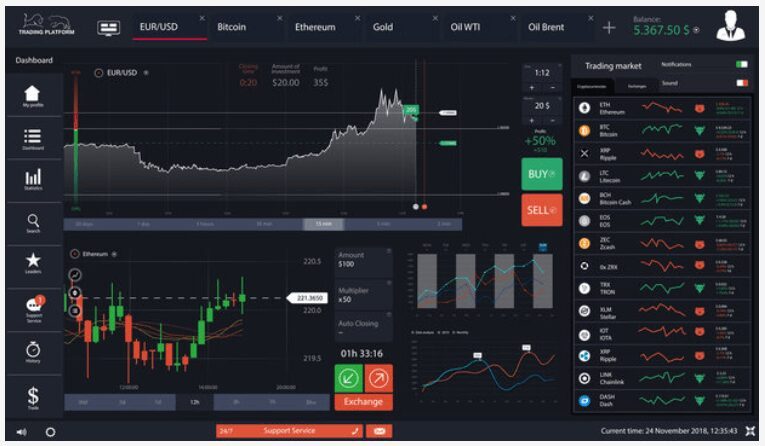
Image Source: Corporate Finance Institute
Portfolio diversification is the life-blood of risk management. Leading trading platforms now give investors access to an expanding range of investment options.
What Asset Classes Are Available
Major online trading platforms provide investment products that go beyond simple stocks and ETFs. Charles Schwab lets investors trade commission-free products without minimum deposits. Fidelity gives traders access to fractional shares, mutual funds, ETFs, options, bonds, and cryptocurrency. Interactive Brokers stands out with one of the most extensive selections that includes stocks, ETFs, mutual funds, bonds, options, futures, and cryptocurrencies.
Why Asset Diversity Matters
Different asset classes react uniquely to economic and political conditions. This lack of correlation protects investors against broad financial risk. Investors can reduce their portfolio’s volatility by spreading investments across stocks, bonds, cash, and alternative assets like commodities or real estate. It also limits the risk of major losses that come from focusing too heavily on a single security or asset class.
How Asset Access Helps Traders
Complete access to multiple asset classes lets traders:
- Target volatility in active markets—gold may be active while crude oil markets quiet down
- Execute tactical asset allocation strategies during different business cycle phases
- Create balanced positions across markets to minimize exposure to single market volatility
Paper Trading and Simulators

Image Source: Webull
Paper trading’s foundations lie in practicing without financial risk, a simulation feature that leading online trading platforms offer.
What Paper Trading Is
Paper trading simulates trading experience using virtual money instead of real capital. Traders can execute market orders against live data without any risk. In the past, aspiring traders wrote hypothetical trades on paper to learn simple concepts. Today’s brokers provide electronic simulators that mirror their actual trading platforms with charts, order types, and market data.
Why Simulators Matter
Traders can test strategies without financial consequences through paper trading simulators. This preparation helps beginners learn platform mechanics and experienced traders test new approaches. These simulators connect theoretical knowledge with real-life application. Platforms like thinkorswim paperMoney give traders $100,000 of virtual buying power, which creates realistic trading scenarios without consequences.
How Paper Trading Helps Traders
We build essential habits before risking actual money through paper trading. Traders can:
- Develop emotional discipline and overcome fear of making mistakes
- Test strategies in different market conditions
- Become skilled at technical tools and order execution
Research shows that traders who practice extensively in simulators achieve better outcomes when they switch to live trading. Note that treating paper trading as seriously as live trading is crucial to make it work.
Comparison Table
| Feature | Core Function | Key Benefits | Notable Statistics | Implementation Features |
|---|---|---|---|---|
| Commission-Free Trading | Lets users buy/sell without direct trading fees | Saves investment capital, supports frequent trading | Trading frequency increases ~30% without fees | Payment for order flow, interest on cash balances |
| Accessible Interface | Simple system to navigate platform features | Minimizes errors, boosts efficiency | N/A | Clean layouts, customizable dashboards, one-click trading |
| Mobile App Access | Trade through smartphones/tablets | Trade from anywhere, instant market access | 70% of global retail traders use mobile apps | Cross-platform compatibility, 300+ technical charts |
| Advanced Charting Tools | Shows interactive price data visualization | Spots patterns, supports technical analysis | 14+ chart types, 90+ drawing tools, 100+ indicators | AI-powered pattern recognition, multiple timeframes |
| Up-to-the-minute Market Data | Fresh financial information | Quick response to market changes | 500,000+ daily trades (LSE) | Live pricing, order book updates, streaming data |
| Low/No Account Minimums | No required starting deposit | Easy access, flexible entry | Major platforms require $0 minimum | Some services need minimums (e.g., $500 for robo-advisory) |
| Fractional Share Investing | Buy portions of whole shares | Diverse portfolio with limited capital | Start with as little as $1 | Proportional dividend payments, automatic calculations |
| Robo-Advisory Integration | Automated investment management | Lower fees, optimized portfolios | Market growing to $116.40B by 2033 | 0.25-0.50% management fees, automatic rebalancing |
| Educational Resources | Learning materials and guides | Build skills, practice safely | 86% of students use AI in studies | Videos, articles, webinars, interactive courses |
| Customizable Dashboards | Set up your workspace | Organize information, enhance focus | Experienced traders use 3.04 panels vs 2.89 for novices | Multiple information panels, flexible arrangements |
| Order Types/Execution | Different trade execution options | Control prices, manage risks | Milliseconds affect profitability | Market, limit, stop, stop-limit orders |
| Security/2FA | Layered protection systems | Protect assets and data | N/A | Encryption, firewalls, biometric verification |
| Customer Support | Help through multiple channels | Solve problems, access accounts | 95% say service affects brand loyalty | Live chat, phone, email, weekend coverage |
| Diverse Asset Classes | Trade various investment types | Spread risks, find opportunities | N/A | Stocks, ETFs, bonds, crypto, commodities |
| Paper Trading | Practice in risk-free environment | Test strategies, develop skills | $100,000 typical virtual buying power | Real-time data simulation, practice accounts |
Conclusion
Looking ahead to 2026, your choice of online trading platform will greatly affect your investment experience. The 15 features we discussed form the foundation of what modern platforms should offer. Market access has become more democratic through commission-free trading and low account minimums. Investors can now build diverse portfolios with fractional shares, whatever their starting capital might be.
Trading platforms’ technology keeps evolving naturally. You’ll need analytical firepower from advanced charting tools, live market data, and customizable dashboards to make smart decisions. The mobile app access lets you grab trading opportunities anywhere, anytime.
Your assets and personal information stay protected through two-factor authentication and reliable security protocols. Complete customer support gives you peace of mind when technical issues pop up during crucial trading moments.
New traders and veterans alike can benefit from educational resources and paper trading simulators. These tools let you develop skills without risking money before you enter live markets. Your strategy can adapt to changing market conditions through diverse asset access and sophisticated order types.
Robo-advisory services show how algorithmic assistance has changed trading radically. These tools don’t replace human judgment but help make better decisions through automated portfolio management at lower costs than traditional advisory services.
The best trading platform brings together all these features while keeping the interface user-friendly. Traders who pick platforms with these capabilities will be better prepared to handle market complexities, control risk, and achieve stronger investment results over the next several years.
FAQs
Q1. What essential features should I look for in an online trading platform? A comprehensive trading platform should offer commission-free trading, a user-friendly interface, mobile access, advanced charting tools, and real-time market data. Additional important features include low or no account minimums, fractional share investing, and access to diverse asset classes.
Q2. How does robo-advisory integration benefit traders? Robo-advisory integration provides automated investment management at lower fees compared to traditional advisors. It offers portfolio optimization, automatic rebalancing, and can help traders make data-driven decisions. This feature is particularly useful for those who want professional-grade management without the high costs.
Q3. Why is paper trading important for both novice and experienced traders? Paper trading allows traders to practice strategies and test ideas in a risk-free environment using virtual money. It helps build essential habits, develop emotional discipline, and master technical tools before risking real capital. Both beginners and experienced traders can benefit from using simulators to refine their approaches.
Q4. How does mobile app access enhance the trading experience? Mobile app access enables traders to monitor markets, execute trades, and manage their portfolios from anywhere with an internet connection. This flexibility is crucial in today’s fast-paced markets, allowing traders to respond quickly to market changes and capitalize on opportunities regardless of their location.
Q5. What security features should I prioritize in a trading platform? Key security features to look for include robust encryption protocols, two-factor authentication, firewalls, and dedicated fraud protection teams. These measures help protect your assets and personal information from unauthorized access. Additionally, automatic session timeouts and security alerts for suspicious activities provide extra layers of protection.

