


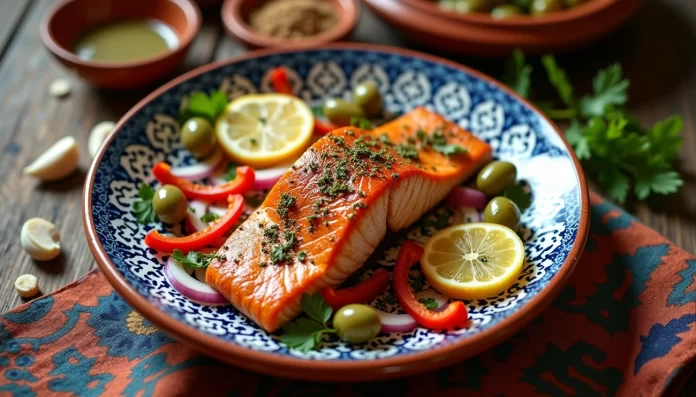
Moroccan salmon brings together some of North Africa’s most vibrant flavors. The Spanish influences make this dish my absolute favorite. Traditional cooking methods blend perfectly with modern techniques to create something magical.
The recipe stands out from other white fish dishes because of its adaptability. You can use different types of fish based on what you find at the market. This impressive dinner looks complex but comes together easily. The dish follows an ancient formula that enhances beauty by combining elements known to preserve youth and reinforce health. Salmon, cod, or swai work beautifully with this Moroccan-Spanish fusion whether you bake or pan-fry them.
Let me show you everything in authentic Moroccan salmon preparation. We’ll explore the bright chermoula marinade and master the cooking techniques. You’ll also learn how to adapt the recipe for different fish and discover the best serving suggestions for your dinner parties.
The Story Behind Moroccan Salmon
My first taste of Moroccan salmon brings back childhood memories of a bustling kitchen filled with jingling bracelets and animated stories. I stood in the doorway watching my mother’s friend move through our kitchen. She had the confidence of someone who belonged there as she prepared fish covered in a sauce “the color of fire” while sharing tales of Morocco and family gatherings around seemingly endless tables.
A blend of Moroccan and Spanish culinary roots
Moroccan and Spanish cuisines share a deep connection beyond their close locations. “Moroccan cuisine is very similar to Spanish cuisine, because we share the coastline, we share the fish,” as one Moroccan chef explains. Their culinary marriage combines Andalusian influences with North African traditions to create dishes that honor both heritage lines.
The fusion flows naturally from shared waters and ingredients. Spanish restaurants often use Moroccan elements like confit techniques, saffron, and argan oil. North African kitchens embrace Mediterranean flavors that cross cultural boundaries. This beautiful exchange creates dishes that celebrate cultural harmony on a plate.
Why salmon works beautifully in North African cuisine
Traditional Moroccan fish recipes didn’t always include salmon. Moroccan tables featured whole white-fleshed fish with the head attached—especially during celebrations like Rosh Hashanah, symbolizing “the head of the new year”.
All the same, salmon has become the perfect canvas for North African spices. Its rich, fatty texture balances perfectly against the acidity and heat of traditional Moroccan sauces. The fish maintains its shape while absorbing the complex spice profiles and tomato-based sauces that define Moroccan cooking.
More importantly, salmon’s omega-3 fatty acids complement the anti-inflammatory compounds found in North African spice blends. Harissa, orange, ginger, and garlic create a deep, warm crust that turns ordinary salmon into something extraordinary.
Purists might choose traditional white fish like grouper, sea bass, or barramundi. Yet salmon’s worldwide availability makes this once-regional recipe available to home cooks everywhere. This adaptation preserves authentic flavors while creating new traditions—much like Moroccan cuisine’s evolving story itself.
Essential Ingredients and Their Roles
A stellar Moroccan salmon dish comes alive when you know its essential components. The right ingredients not only make it authentic but create that perfect balance of flavors you’d expect from North African cuisine.
Fresh salmon filets or white fish alternatives
Great fish recipes start with the right protein. My recipe highlights salmon, but you’ve got options. Fresh salmon filets (about 5-6 oz each) have a rich, fatty texture that soaks up Moroccan spices beautifully. The fish’s natural oils keep it moist and flavorful while standing up to bold seasonings.
Firm white fish varieties work great too. You might want to try halibut, cod, sea bass, or swordfish steaks. These fish hold their shape well during cooking and won’t fall apart when you add spices and sauce.
Chermoula: the heart of Moroccan flavor
You could call chermoula Morocco’s answer to pesto—without dairy and nuts. This bright herb-based sauce is the soul of authentic Moroccan fish recipes. Each bite bursts with complex flavors.
A traditional chermoula blends fresh cilantro, parsley, garlic, lemon juice, and olive oil with earthy spices like cumin, coriander, and paprika. Some cooks add preserved lemon or a pinch of saffron for extra depth. The sauce keeps some texture rather than being completely smooth. This makes it a great marinade that seeps deep into the fish.
Spanish olives, preserved lemon, and paprika
A few special ingredients lift this dish to new heights:
Preserved lemons—a North African cooking staple—pack a unique briny, citrusy punch that fresh lemons just can’t match. Spanish olives add salt and texture, showing Spain’s influence on the dish. Moroccan paprika (often mixed with olive oil and sea salt) brings both stunning color and amazing depth.
Optional swaps: cod, swai, or red fish
No salmon? No problem! Cod makes a fantastic substitute with its firm, mild flesh that takes on Moroccan seasonings perfectly. Swai gives you a budget-friendly option with a neutral flavor that soaks up spices well. Red snapper offers something different—its slight sweetness pairs beautifully with chermoula’s tangy, herbaceous notes.
Step-by-Step: How to Make Moroccan Salmon

Image Source: Ottolenghi
Let’s take a closer look at the cooking process for our Moroccan salmon. This recipe shines with its straightforward preparation that delivers restaurant-quality results.
1. Marinate the fish with chermoula
The chermoula preparation starts with combining cilantro, parsley leaves, garlic, cumin, coriander, lemon zest, and juice in a food processor. A few pulses will finely chop the ingredients. The olive oil goes in gradually during processing until the mixture becomes smooth. Add salt and pepper to taste. The salmon filets need an even coating of this vibrant paste. Let them marinate for 15 minutes at room temperature. You can also leave them in the refrigerator overnight to develop deeper flavors.
2. Prepare the vegetable base
The fish needs a flavorful bed made from sliced red bell peppers, cherry tomatoes, and thinly sliced garlic. Heat olive oil in a large pan over medium heat and sauté these vegetables until soft. The Mediterranean profile gets better when you add sliced preserved lemon and Spanish olives. Your fish will get extra flavor from this moist vegetable mixture during cooking.
3. Bake or pan-fry: choosing your method
You have two excellent cooking options:
For baking: The oven should be at 375°F. Put the marinated salmon on your prepared vegetable base with its skin facing down. It needs 10-15 minutes until it flakes easily.
For pan-frying: A non-stick skillet works best over medium-high heat. Cook the salmon skin-side up for about 4 minutes until golden brown. A careful flip and 3 more minutes will make the fish opaque and flaky.
4. Final touches: garnish and serve
Fresh cilantro leaves, lemon wedges, and a light drizzle of quality olive oil will lift this dish. The bright herbs create a beautiful contrast against the rich salmon and colorful vegetables. The skin can come off before serving, though its crispy texture delights many when cooked right.
Serving Ideas and Flavor Pairings
Your Moroccan salmon tastes great on its own, but the right side dishes can take it from delicious to unforgettable.
Best sides: couscous, rice, or flatbread
Couscous makes the perfect match for Moroccan fish recipes. A 1:1½ ratio of couscous to water works best, though you’ll need slightly less water when adding lemon juice. Let it steep in boiling water for about 3-5 minutes. A fork helps fluff it up nicely, and a teaspoon of butter adds extra richness. Whole wheat couscous gives you a nutritious option that goes perfectly with the fish.
Rice works great too, especially when you want something to soak up all that flavorful sauce. The dish becomes more authentic with homemade challah or your favorite crusty bread – you’ll want something to catch every drop of that aromatic broth.
How to turn it into a full fish dinner
This Moroccan salmon becomes a complete meal with the right side dishes. The fish tastes amazing with roasted vegetables like broccoli, string beans, or sweet potatoes. Fresh herbs such as cilantro or mint add bright colors and flavors. A bed of salad greens or a spicy Moroccan carrot salad creates a refreshing contrast if you want something lighter.
Pairing with wine or mint tea
Wine lovers have several options that go together with Moroccan salmon:
- Dry Alsatian Pinot Gris or crisp Sauvignon Blanc balances the dish’s richness
- Spanish Garnacha rosado strikes the perfect middle ground
- Light-bodied reds like Pinot Noir add flavor without being too heavy
A traditional Moroccan mint tea offers an authentic non-alcoholic choice that feels especially comforting with this aromatic fish dinner.
Conclusion
Moroccan salmon showcases the beautiful fusion of North African and Spanish culinary traditions. This dish connects centuries of shared Mediterranean history through vibrant flavors and colorful presentation. You’ll understand without doubt why it has become one of my favorite ways to prepare fish after trying this recipe.
What makes this dish special is its adaptability. Salmon shines as the main protein, but other firm fish varieties work just as well based on what you can find or prefer. The chermoula marinade—that brilliant mix of herbs, spices, and olive oil—changes any fish into something extraordinary.
On top of that, it gives you options for cooking methods. The gentle heat of baking and the crispy exterior from pan-frying both create delicious results. The vegetable base adds nutrition and creates a flavorful sauce that enhances the fish’s taste.
This Moroccan-Spanish fusion opens up countless possibilities for creative meal planning. It becomes a complete dinner when served with fluffy couscous, rice, or crusty bread – perfect for both weeknight meals and special occasions.
Note that this Moroccan salmon breaks away from ordinary fish recipes. The straightforward preparation makes it available to home cooks of all skill levels, despite its sophisticated appearance. Your kitchen will fill with North Africa’s aromatic scents, and your table will display the culinary magic that happens when cultures meet on a plate.
FAQs
Q1. What is chermoula and how is it used in Moroccan salmon? Chermoula is a vibrant herb-based sauce that forms the heart of Moroccan flavor. It’s made with fresh cilantro, parsley, garlic, lemon juice, olive oil, and spices like cumin and paprika. In Moroccan salmon, chermoula is used as a marinade to infuse the fish with complex, bright flavors.
Q2. Can I use other types of fish instead of salmon for this recipe? Yes, you can use other fish varieties. While salmon works beautifully, firm white fish like cod, halibut, sea bass, or even swordfish steaks can be excellent alternatives. These options maintain their structure during cooking and absorb the Moroccan spices well.
Q3. What are some traditional side dishes to serve with Moroccan salmon? Couscous is the quintessential pairing for Moroccan fish dishes. Other great options include fluffy rice, roasted vegetables, or a spicy Moroccan carrot salad. Serving the salmon with homemade challah or crusty bread is also common to soak up the flavorful sauce.
Q4. How long should I marinate the fish in chermoula? For best results, marinate the fish in chermoula for at least 15 minutes at room temperature. If you have more time, you can marinate it in the refrigerator for up to overnight to allow for deeper flavor penetration.
Q5. What cooking methods work best for Moroccan salmon? Two excellent cooking methods for Moroccan salmon are baking and pan-frying. Baking involves placing the marinated salmon on a vegetable base and cooking it in the oven at 375°F for 10-15 minutes. Pan-frying requires cooking the salmon in a non-stick skillet over medium-high heat for about 4 minutes on each side until golden brown and flaky.

