


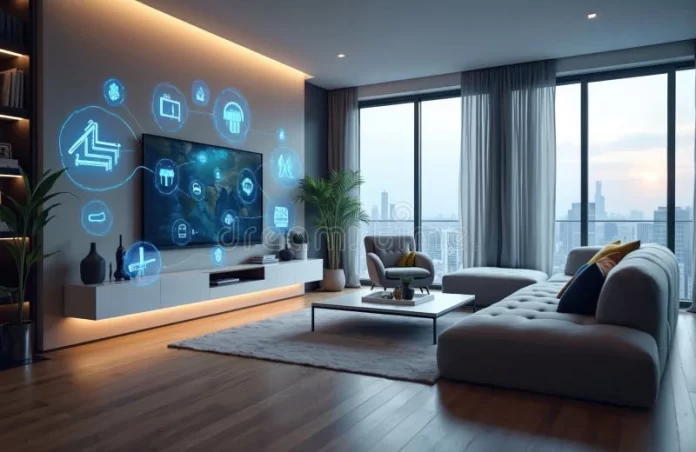
Smart homes are evolving faster from luxury to necessity. The global market will surge from $73.7 billion in 2024 to an impressive $254.3 billion by 2034. This remarkable growth shows smart home technology isn’t just a passing trend but a thoughtful investment in comfort, safety, and long-term flexibility.
Homeowners now want sophisticated ways to manage their residences. Smart thermostats and LED lighting systems help reduce monthly costs, while leak detectors and appliance monitors prevent expensive damage. Broadband connectivity plays a vital role in supporting these digital homes. A truly future-proof smart home needs more than the latest gadget trends. It needs a reliable foundation that allows technology to grow and adapt naturally for years ahead.
This detailed guide will help you create an obsolescence-proof smart home system that will stand the test of time. We’ll get into the core technologies shaping the future of smart homes. Edge AI increases personalization while 5G adoption grows along with the promise of Wi-Fi 7. Let’s find out how to build a smart home ready for whatever the future brings.
Core Technologies That Will Define Future Smart Homes

Image Source: DM WebSoft LLP
Smart homes are evolving beyond basic voice commands and scheduled routines. The technological foundation of intelligent homes will transform how we live in 2025. Several breakthrough technologies now work together to create adaptive living spaces that understand and anticipate our needs.
AI-Powered Assistants: Context-Aware Automation in 2025
Context-aware systems have made a big leap forward from rule-based automation. Modern AI assistants respond dynamically to occupancy patterns and learn your priorities over time. Major tech companies are leading this change. Google’s Gemini Home and Amazon’s Alexa Plus now deliver unique experiences with generative AI. These systems understand context and take actions without needing exact device names or complex automation setups. They interpret activities like working, entertaining, or sleeping and adjust to environmental factors such as natural light and external climate.
Edge AI vs Cloud AI: Privacy and Latency Tradeoffs
Edge and cloud processing choices are vital decisions for future-proof smart homes. Edge AI handles data processing on local devices. This eliminates the need for internet connectivity and cuts down latency substantially. Your sensitive information stays on the device instead of going to servers, which boosts privacy. Cloud AI uses remote servers with massive computational power but raises privacy concerns and latency issues. Many homeowners now choose hybrid approaches. They use edge processing for time-sensitive tasks like security monitoring while cloud resources handle more complex analysis.
Matter Protocol for Cross-Brand Interoperability
Matter solves the biggest problem of fragmentation in smart homes. This universal framework promotes continuous connection between different brands. The industry-standard protocol supports Wi-Fi, Thread, and Ethernet. Users can focus on applications rather than worrying about compatibility. Matter uses 128-bit AES encryption for all network traffic and includes financial-class security measures to protect smart home communications. The protocol also uses Distributed Compliance Ledger, a blockchain approach that ensures only approved devices connect to your network.
5G and Wi-Fi 7 for Real-Time Device Communication
5G integration with Wi-Fi 7 in smart home devices offers unique connectivity options. Wi-Fi 7 brings several improvements including higher data rates, lower latency, and better reliability. Advanced features like Multi-User MIMO and Multi-Link Operation use spectrum efficiently. Multiple devices can connect at once without losing performance. This combination removes traditional bottlenecks between broadband connection and internal Wi-Fi distribution. The result is a more responsive and reliable smart home experience.
Building a Scalable and Obsolescence-Proof Smart Home System
Building a future-proof smart home takes more than just collecting state-of-the-art devices—you just need careful planning of your infrastructure. Let’s look at the key building blocks that will keep your system flexible for years ahead.
Structured Wiring for Centralized Device Management
A strong wired backbone sits at the heart of any lasting smart home system. Wireless technology has come far, but structured cabling with Category 6 or better Ethernet gives you the most reliable foundation for modern automation systems. Media enclosures work as central hubs that manage network equipment and smart components. These hubs offer clean installation choices that match your home’s look. A centralized wiring setup creates standard paths to send data, audio, and video signals throughout your home. This setup gives you reliable connections between multiple systems.
Modular Hardware Design for Easy Upgrades
Long-term smart home success comes from using modular parts you can upgrade one at a time without replacing everything. This lets you grow your system step by step as technology advances. High-end AV receivers that work with new formats or modular wall switches that let you upgrade the interface without new wiring are great examples. Then, as new features become available, you can add them without disrupting your whole setup.
Cloud-Independent Local Control Systems
Local control makes your system more private and reliable. Systems that process commands on your local network keep working during internet outages. They also avoid issues with third-party data collection that plague cloud-based services. Platforms like Home Assistant and Hubitat run locally, giving you instant responses and protection from service shutdowns that often hit cloud-dependent devices. A mixed approach often works best—local processing handles time-sensitive tasks while cloud features add extra benefits when needed.
Digital Twin Integration for Predictive Maintenance
Digital twins are virtual copies of your home systems that bring a new approach to maintenance. AI algorithms watch equipment performance through built-in sensors. These algorithms spot patterns and unusual behavior that might signal future problems. This helps schedule maintenance before small issues become big repairs. To name just one example, AI diagnostics can tell when your dishwasher uses too much water, catching potential clogs before they cause serious damage.
Security, Privacy, and Sustainability in Future Smart Homes
Smart homes with sophisticated technology have made security and privacy top priorities. These concerns, along with sustainability features, are vital pillars of future-proof smart home design.
Biometric Smart Locks and AI Surveillance
Biometric authentication has transformed home access systems. Fingerprint door locks provide better security than traditional PIN codes because they link uniquely to individuals and are hard to fake. These systems store encrypted fingerprint data locally with 128-bit AES encryption and never send sensitive biometric information to the cloud. Combined with AI-powered surveillance, these systems create strong layers of protection.
AI surveillance has grown beyond simple recording to detect actual threats. These systems analyze behavior patterns live and can tell normal activities from security risks. They spot suspicious behavior—like someone spending too much time at your doorway—and alert homeowners right away. The systems learn from past data to spot patterns that might signal threats before they happen.
Data Encryption and Local Storage Protocols
Strong encryption serves as the foundation of smart home security. Using both asymmetric and symmetric encryption algorithms—specifically RSA + AES hybrid encryption—makes device communication more secure. New technologies like quantum encryption and homomorphic encryption guard against sophisticated cyber threats better than ever.
Local storage adds another key privacy protection layer. Smart home devices that process data locally keep personal information within your home network—motion detection events, voice commands, and sensor readings stay in your system. This setup removes worries about third-party data collection or possible breaches while keeping everything working during internet outages.
Sustainability Sensors for Air, Water, and Energy Monitoring
Modern environmental monitoring goes beyond simple comfort settings. Sustainability sensors track air quality, water usage, and energy patterns to save resources efficiently. These systems detect small changes—like higher water usage that might mean leaks—before they turn into big problems.
Insurance Incentives for Smart Security Systems
Installing smart security now saves money through insurance discounts. Insurance providers cut premiums for homes with security systems, saving homeowners about $59 yearly. These discounts cover more than just basic alarms—they include water leak detectors, smart smoke detectors, and complete monitoring services. These systems protect your property and prevent claims that might increase your future rates.
Personalization and Lifestyle Adaptation Through AI
Smart homes and their AI systems now work together more naturally with their occupants. These modern systems learn from residents’ daily patterns and adjust the environment to match their priorities without needing manual setup or constant changes.
Routine Learning via On-Device Machine Learning
The EL-HARP model shows a breakthrough in on-device learning. Homes can now predict what you’ll do next based on your past activities. Unlike older systems that follow fixed schedules, these new frameworks learn step by step from what’s happening around them to arrange appliances and controls automatically. The technology uses five immediate subsystems. These detect if someone is home, track where they are, predict what they might do, and learn new ways to combine appliance usage—all without needing cloud connections.
Voice-Controlled Accessibility for Seniors
Voice assistants help elderly users live independently. Seniors can control their home environment hands-free. They adjust lights, change temperatures, or call family by just speaking. These AI assistants now watch daily routines and remind users about medications. They can answer questions like “Did I take my meds?” or “Are the dogs fed?”. The platforms also keep older adults company with endless patience while quietly monitoring their health.
Dynamic Lighting and Climate Based on Occupancy
Adaptive lighting has grown from simple automation into a way to improve mood. These systems change lighting based on time, weather, and what you’re doing—creating the right setting for work, rest, or fun. Smart environmental controls cut energy use while keeping you comfortable. The system learns when you use specific rooms and adjusts light colors throughout the day to match your body’s natural rhythms.
Smart Kitchen Appliances with Inventory Tracking
Kitchen technology has moved beyond simple automation to complete inventory management. The GE Profile™ Smart Refrigerator shows this development with its built-in Scan-to-List barcode scanner that knows over four million products. This breakthrough builds digital grocery lists with full product details automatically. AI-powered cameras let you check what’s in your fridge from anywhere. Smart appliances now also offer:
- Recipe suggestions based on available ingredients
- Nutritional analysis arranged with personal health goals
- Voice control to cook hands-free
Conclusion
Smart home technology stands at a turning point in 2025. Systems are moving beyond simple automation to create truly intelligent environments that adapt to our needs. This piece explores the essential elements that make homes not just smart but ready for the future.
Creating obsolescence-proof smart homes depends more on thoughtful infrastructure choices than chasing every new gadget. Structured wiring forms the foundation, and modular components enable gradual upgrades without complete system overhauls. Local processing keeps your home working whatever the internet connectivity or third-party service changes.
Security has become a top priority as our homes gather more data. Biometric systems, AI surveillance, and reliable encryption create multiple protection layers. Local storage keeps sensitive information within your walls. These security investments often lead to real financial benefits through lower insurance premiums.
AI systems now understand context and learn from our behaviors. They create homes that predict needs, adjust to priorities automatically, and help all family members. Seniors benefit greatly from voice-controlled environments that give them more independence.
Building a smart home means balancing state-of-the-art technology with practical needs. Tomorrow’s innovations will make today’s revolutionary features seem simple. A focus on adaptable infrastructure rather than specific devices offers the best path forward to create a future-ready smart home.
Smart homes will transform dramatically in coming years. The core principles in this piece – reliable infrastructure, security-first approaches, and adaptable systems – remain essential foundations. These homes grow alongside technology instead of becoming outdated quickly. A truly intelligent home isn’t just filled with the latest gadgets – it’s designed to welcome whatever innovations tomorrow brings.
FAQs
Q1. What are the core technologies defining future smart homes in 2025? Key technologies include AI-powered assistants with context awareness, edge AI for enhanced privacy, the Matter protocol for cross-brand interoperability, and 5G/Wi-Fi 7 integration for real-time device communication.
Q2. How can I build an obsolescence-proof smart home system? Focus on structured wiring, modular hardware design, cloud-independent local control systems, and digital twin integration for predictive maintenance. This approach ensures your system remains adaptable and upgradeable over time.
Q3. What security and privacy features should I prioritize in a 2025 smart home? Prioritize biometric smart locks, AI-powered surveillance, robust data encryption, local storage protocols, and sustainability sensors for comprehensive monitoring. These features provide multiple layers of protection and efficiency.
Q4. How is AI enhancing personalization in smart homes? AI is enabling routine learning via on-device machine learning, voice-controlled accessibility for seniors, dynamic lighting and climate control based on occupancy, and smart kitchen appliances with inventory tracking capabilities.
Q5. What infrastructure considerations are crucial when building a smart home? Key considerations include running sufficient Ethernet cabling throughout the home, implementing a centralized wiring system, ensuring proper power distribution, and planning for future expandability with conduits and accessible wiring pathways.

